

You call it a night. The air doesn’t.
The air in your bedroom keeps changing after you fall asleep. Give it a place in your plans for better sleep.
Dark. Cool. Quiet. What about the air?
You set up the room for sleep. The air in it is part of that setup.
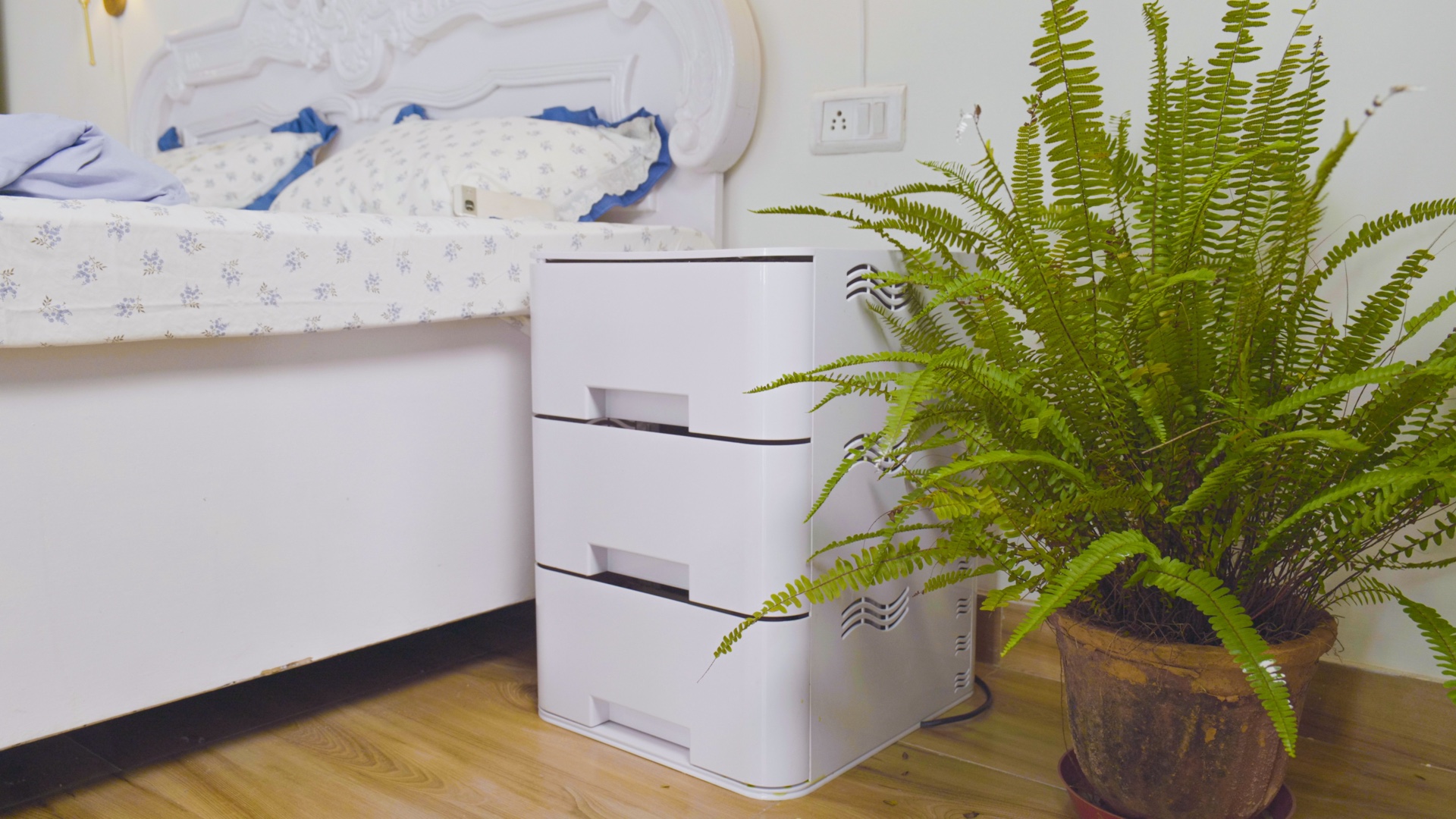
Good morning. Same room. Different air.
Hours of breathing can change the air in a closed bedroom—even when everything looks exactly as you left it.
 01 / 04
A different kind of air purifier
Meet greenwaterHOME. An air purifier that learned photosynthesis.
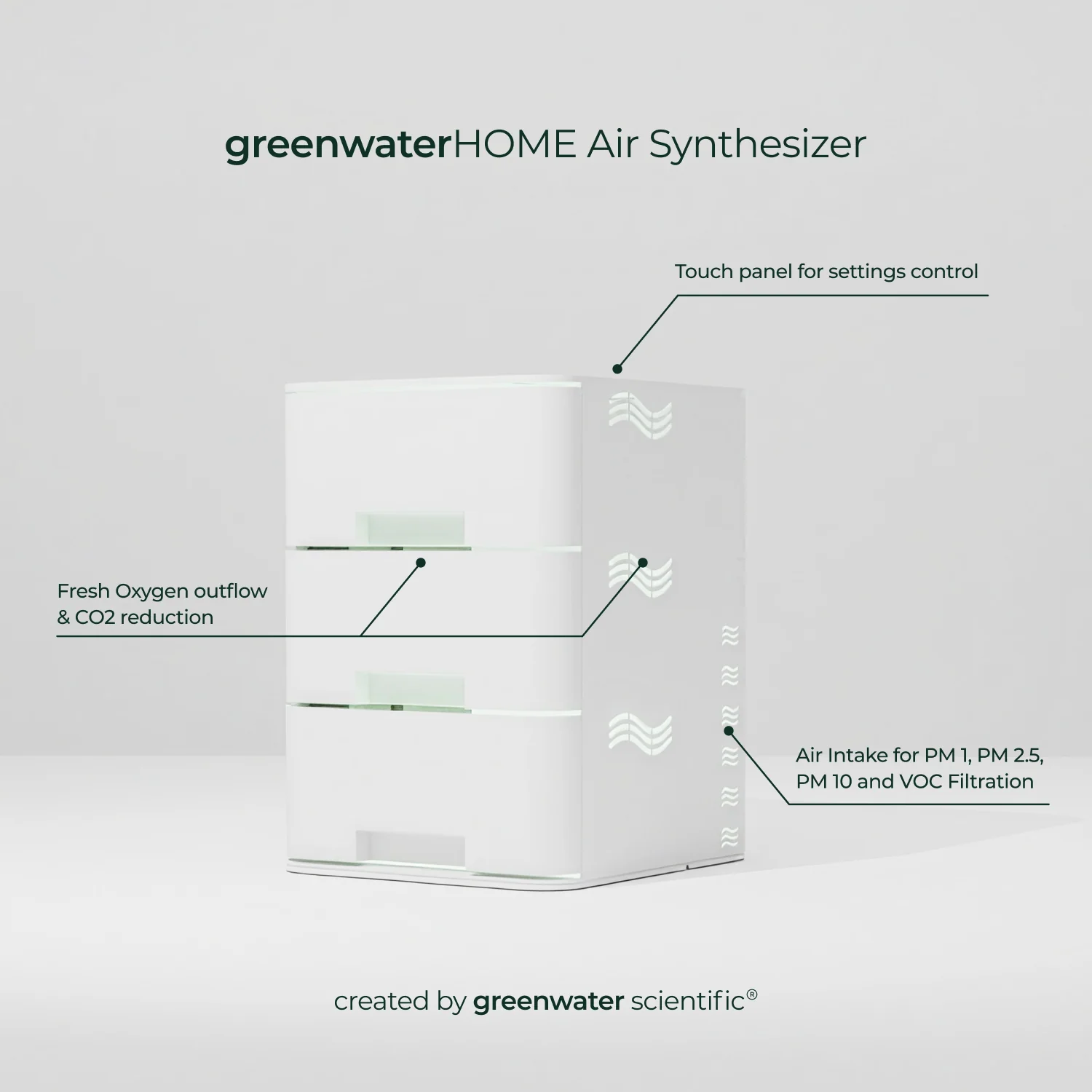
Better air for the rooms you live in. greenwaterHOME filters airborne particles and selected pollutants, while its living microalgae chamber uses light and CO₂ to produce oxygen through photosynthesis.
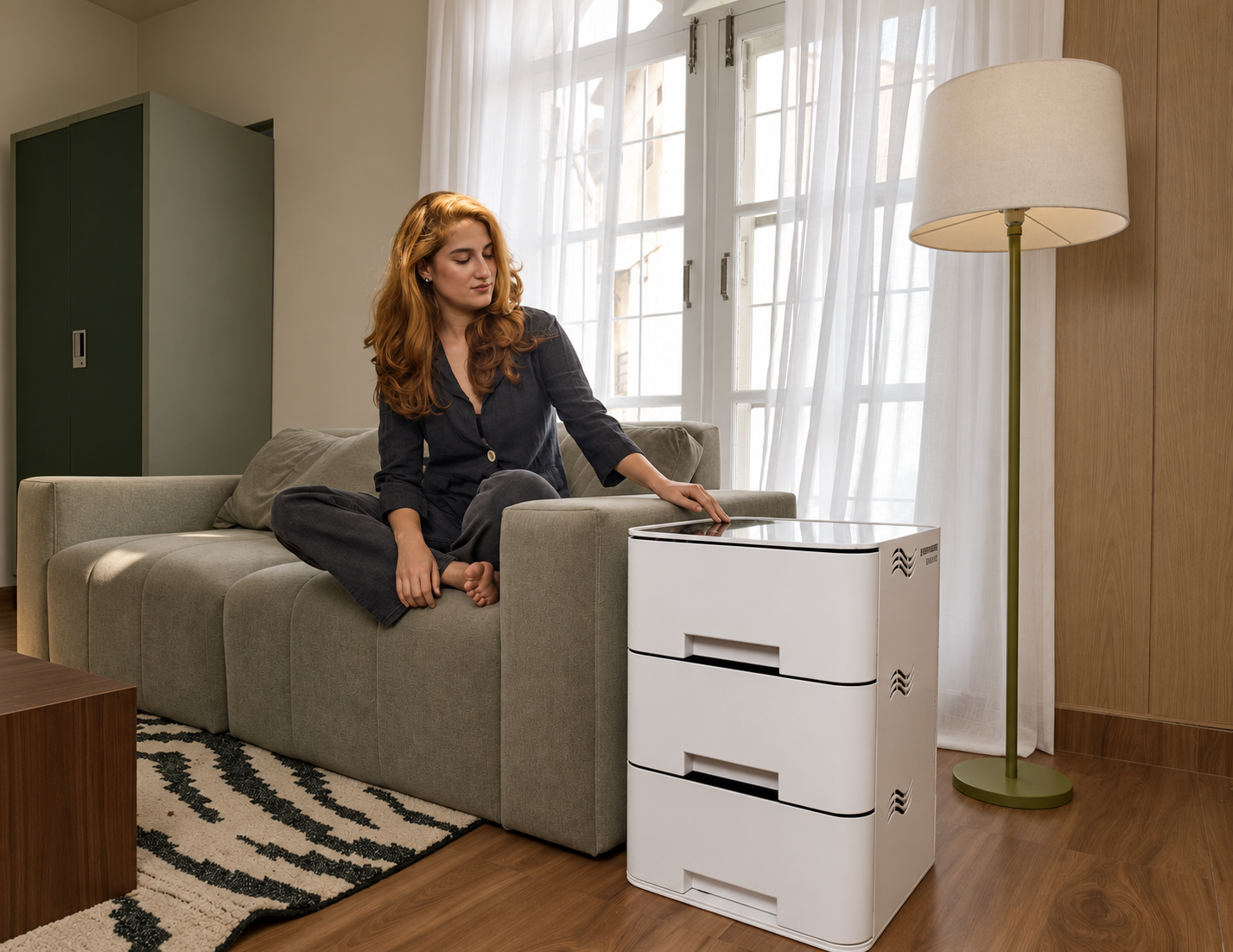
Filtration meets photosynthesis.
Three-stage filtration helps clear dust, pollen, smoke, and selected gases. Then living microalgae take up CO₂ and produce oxygen. One product, two ways to care for the air you spend all night in.
Built for closed modern bedrooms, even when opening a window overnight isn’t practical. Use it alongside sensible ventilation whenever possible.
Give your bedroom a night shift.
Cleaner air. Less CO₂ buildup. Oxygen made while you sleep. Give your body a better room to rest in.
Less in the air. More room to rest.
Three-stage filtration targets dust, pollen, smoke, and selected gases in your sleep space.
A closed room can still get attention.
Living microalgae take up CO₂ that can build up overnight and produce oxygen in the room around you.
You switch off. It doesn’t.
Designed to run overnight, with an automatic day-to-night light cycle. No new bedtime ritual required.

Keep the ritual. Rethink the room.
Read, unwind, switch off. greenwaterHOME stays on, caring for the air while you sleep.
Is bedroom air worth thinking about? The research says yes.
Studies have found differences in some sleep measures when bedroom ventilation or CO₂ conditions changed. The air around your bed matters.
Curious what happens in your room overnight?Explore the room tool +
Know your room. Care for its air.
See how room size, sleepers, and ventilation could change the air overnight—and what greenwaterHOME is designed to do about it.
An illustration, not a reading of your room. Track your sleep? Give your room some attention too.
These room settings suggest the air could change more overnight. This is not a measurement.
While you rest, greenwaterHOME gets to work.
Give it filtration for airborne particles and selected gases, plus living microalgae that use CO₂ to produce oxygen.
Explore greenwaterHOME →Bring better air to bed.
Filtration and oxygen-producing Air Synthesizer, made for your bedroom.
Explore greenwaterHOME